

Yes, glass can be laser engraved, but it needs a UV laser, not a fibre laser. A UV laser marks the surface of glass with a fine, frosted finish that is permanent and won't wash off. A fibre laser, the type most engravers use for metal, passes straight through clear glass and leaves little or no mark.
At LaserGrafix we run both. Fibre lasers handle our steel business cards, pet tags and other metal work. Our UV laser handles glass, acrylic, silicone, leather, wood and some ceramics. This guide explains why the difference matters and what you can have engraved.
Why a fibre laser can't engrave glass
It comes down to wavelength. A fibre laser emits infrared light at about 1,064 nm. Metals absorb that light well, which is why fibre lasers are the standard for engraving steel and aluminium. Clear glass doesn't absorb it, so most of the beam passes through without marking the surface.
A UV laser emits light at about 355 nm. Glass absorbs that much more strongly, so the energy stays at the surface and creates a fine, controlled mark.
UV engraving is also known as "cold" marking. It puts very little heat into the material, which lowers the risk of cracking or chipping that heat-based methods can cause on glass. The result is crisp detail, even on fine text, small logos and curved surfaces.
Fibre vs UV laser at a glance
| Fibre laser | UV laser | |
|---|---|---|
| Wavelength | About 1,064 nm (infrared) | About 355 nm (ultraviolet) |
| Best for | Metals | Glass, plastics and delicate surfaces |
| Materials | Stainless steel, aluminium, brass, copper, titanium, anodised and coated metals | Glass, crystal, acrylic, silicone, leather, timber, ceramics |
| Engraves glass? | No, the beam passes through | Yes, with a fine frosted finish |
| Typical products | Dog tags, steel business cards, nameplates, tools | Glassware, awards, keepsakes, signage |
For the full breakdown of both technologies, see our guide to what laser engraving is.
What glass items can be engraved?
Most smooth glass surfaces take a UV engraving well. Common examples:
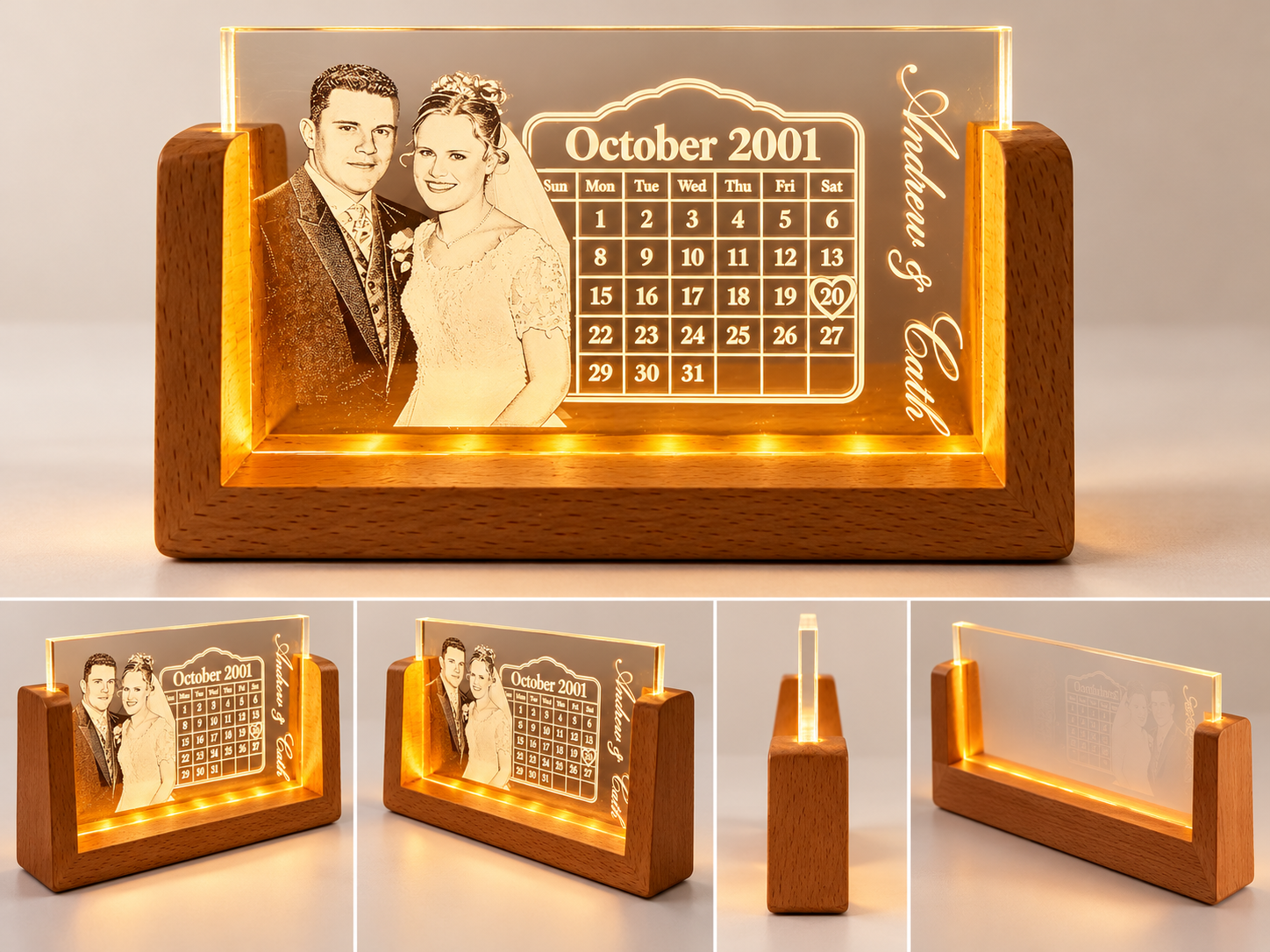
Wine glasses, tumblers and beer glasses
Glass bottles and decanters
Glass awards, trophies and plaques
Jars, candle holders and keepsakes
Glass signage and display pieces
We engrave glass to order rather than stocking glass products in the shop, so tell us what you have in mind and we'll quote it.
You can also supply your own glass item. Send us a photo first so we can confirm it will engrave cleanly. Heavily textured, coloured or coated glass can mark differently, so we'll tell you what to expect before we start.
How long does engraving on glass last?
A UV engraving is permanent. The laser alters the glass surface itself rather than adding ink or a coating, so there is nothing to peel, fade or rub off.
That makes engraved glass practical for everyday use. Hand-washing with warm, soapy water is the safest care for any engraved glassware, as it is for most good glassware. Avoid abrasive scourers on the engraved area to keep the finish crisp.
Frequently asked questions
Can a fibre laser engrave glass? Not effectively. Clear glass doesn't absorb a fibre laser's infrared wavelength, so the beam passes through. Glass needs a UV laser.
Can you engrave coloured or frosted glass? Usually yes, but results vary with the colour and finish. Send us a photo and we'll confirm before you order.
Can I put my logo on glassware? Yes. Vector files (.ai, .svg, .eps or high-res .pdf) give the sharpest result. There's no minimum order, and bulk pricing is available.
Do you ship engraved glass Australia-wide? Yes. We ship from St Helens Park, NSW, with free shipping on orders over $50, or you can collect for free.
Get your glass engraved
Have a glass item in mind, or want to brand glassware for your business? Contact us with a photo and your design, or browse the shop. For more answers, see our FAQ.
About the author Andrew Waud is co-founder of LaserGrafix, a family-owned engraving business in St Helens Park, NSW. LaserGrafix continues the craft of master engraver Richard "Dick" Waud, who started engraving in Sydney in the 1960s, and now works with fibre and UV laser technology.